Company

Build reliable, flexible SMS into your systems with messaging APIs that adapt to your architecture instead of forcing you to adapt to them.

The Challenge
Most SMS API providers force rigid integrations that do not match how real systems are built. Limited routing control and constrained event handling push developers to write unnecessary glue code, creating fragile workflows that become harder to maintain as message volume scales.
Off-the-shelf messaging platforms often require developers to reshape application logic to fit their structure, introducing unnecessary complexity and fragile dependencies.
If inbound text messages, opt-ins, opt-outs, and delivery receipts cannot be routed to custom endpoints, your team ends up rebuilding routing and compliance workflows internally.
As use cases expand and traffic increases, rigid integrations become harder to maintain and harder to trust in production environments.
The Solution
TextBetter gives development teams control over routing, payload handling, and integration patterns so SMS fits cleanly into existing systems without compromising reliability or compliance.
TextBetter’s APIs are designed to integrate into your architecture, not reshape it. Inbound messages, delivery events, opt-ins, and opt-outs can each route to dedicated endpoints, allowing your application to process events using your own business logic. API v2 supports modern JSON-based integrations, while API v1 accommodates HTTP-based calls for simpler or legacy systems.


Trigger outbound messaging directly from system activity such as status changes, scheduling events, or workflow milestones. Consent state and subscription logic remain consistent across connected systems, reducing duplication and compliance drift. Integrations extend naturally as use cases evolve, without forcing architectural rewrites.
For enterprise environments with specialized routing, reporting, or data-handling requirements, TextBetter works directly with your development team to configure custom solutions. SFTP delivery and email-based workflows support legacy platforms that cannot consume real-time APIs.

Why TextBetter


Route inbound messages, opt-ins, opt-outs, and delivery events to custom endpoints for full application-level control across your web and mobile applications.

Consent enforcement and opt-out management are handled consistently across channels so compliance logic does not need to be rebuilt in every system.

When integration issues arise, you work with technical support professionals who understand your configuration and architecture.
Use Cases
TextBetter fits into existing architectures and supports multiple integration patterns, from real-time APIs to file-based workflows.
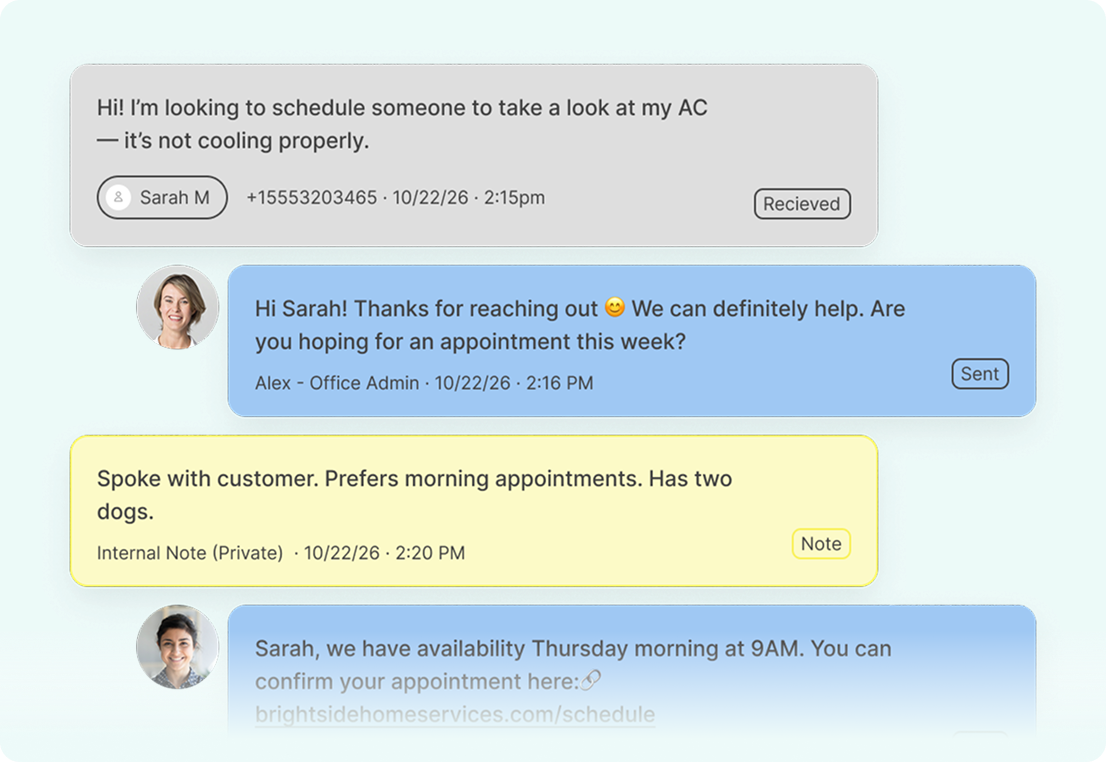
Provide business teams with centralized message visibility while developers maintain control over routing, event handling, and data flow behind the scenes. Conversations remain tied to company-owned numbers rather than individual devices.
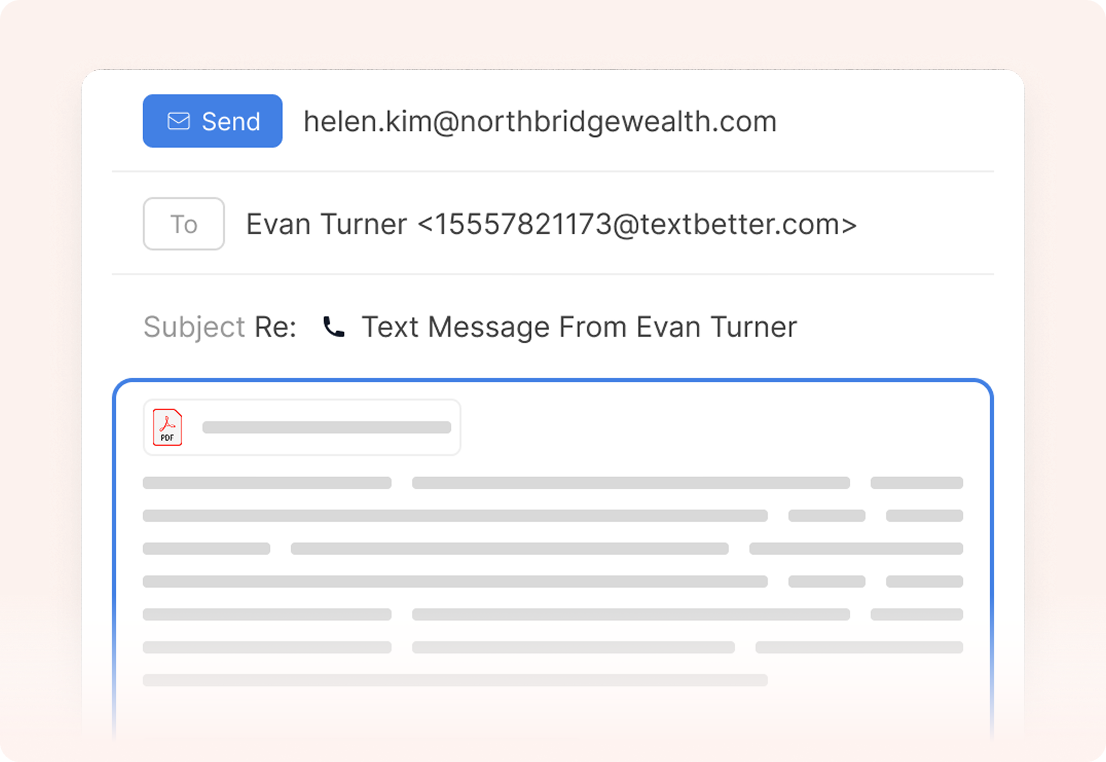
Support email-based messaging workflows for systems that rely on SMTP infrastructure or require messaging to flow through existing mail servers for archival and processing.
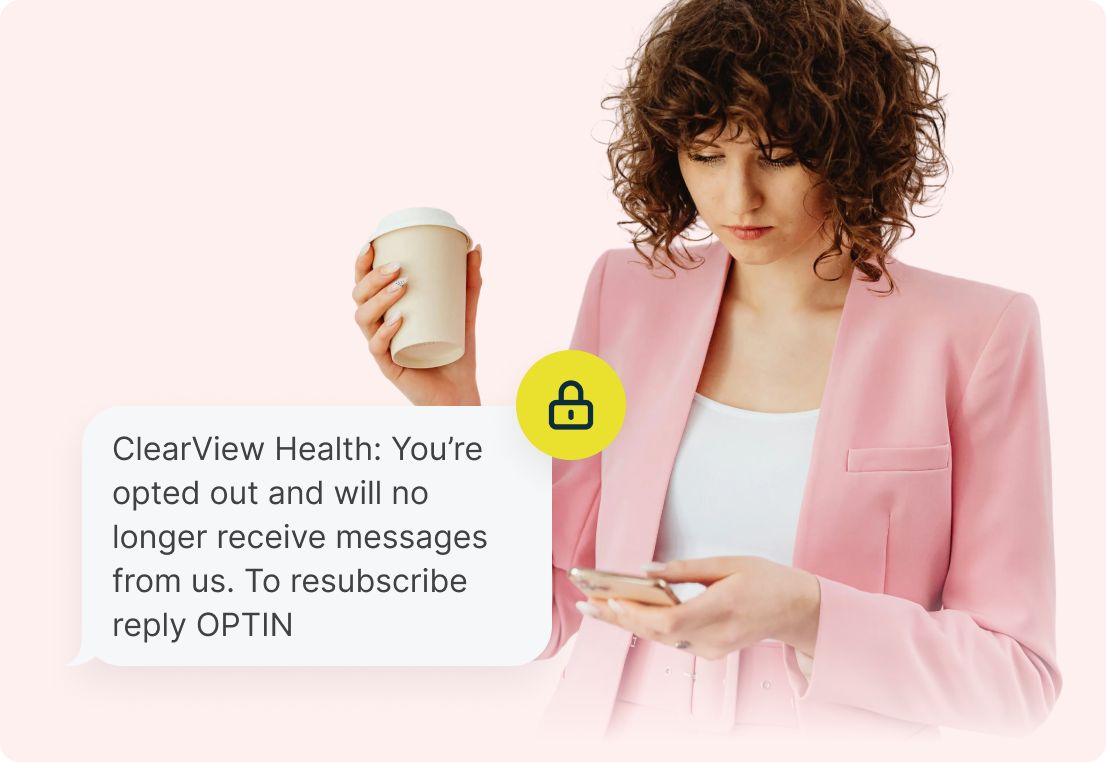
Programmatically synchronize opt-in and opt-out events across systems so consent state remains accurate in real time without duplicating compliance logic inside each application.
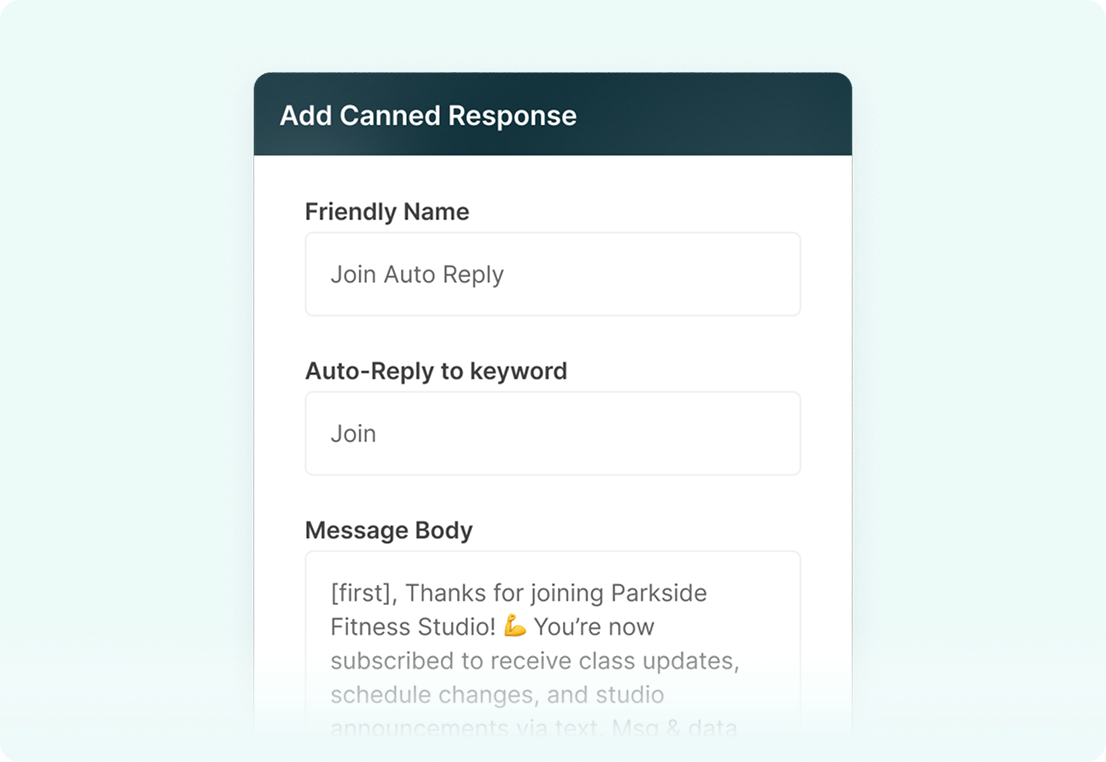
Trigger outbound messaging based on application events such as status updates, form submissions, scheduling actions, or workflow milestones using API calls or webhooks.
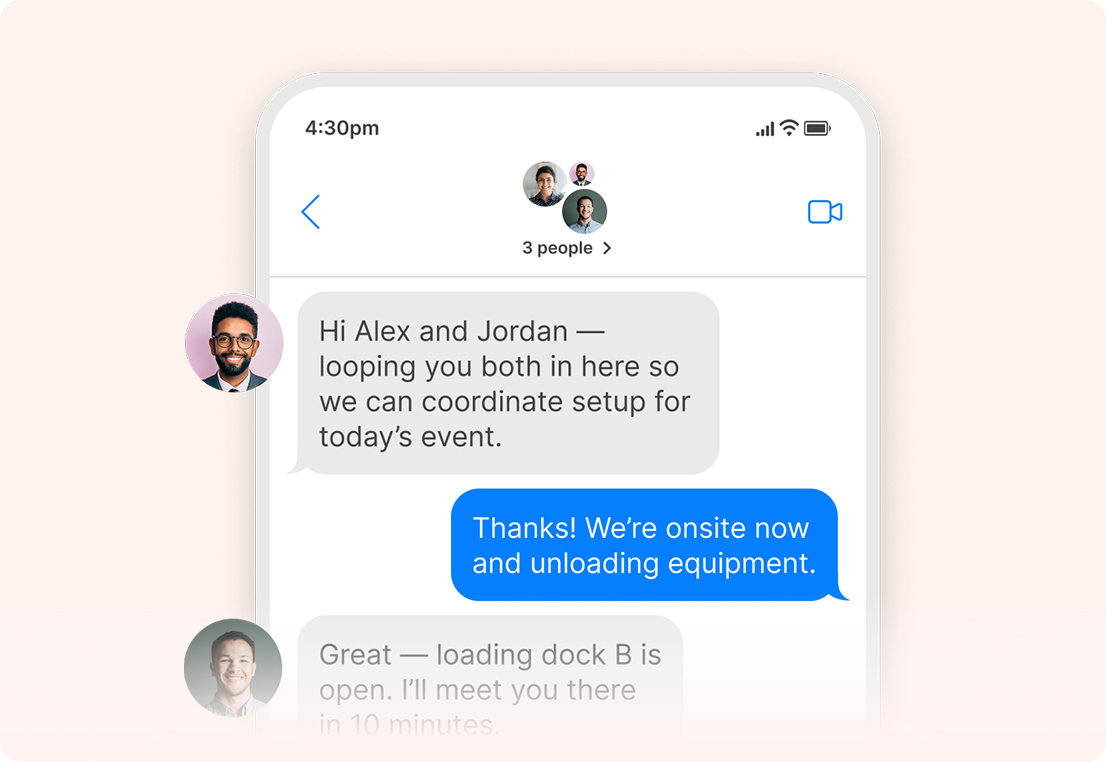
Send batch or segmented messages through API endpoints while preserving individual reply handling, delivery tracking, and event logging.
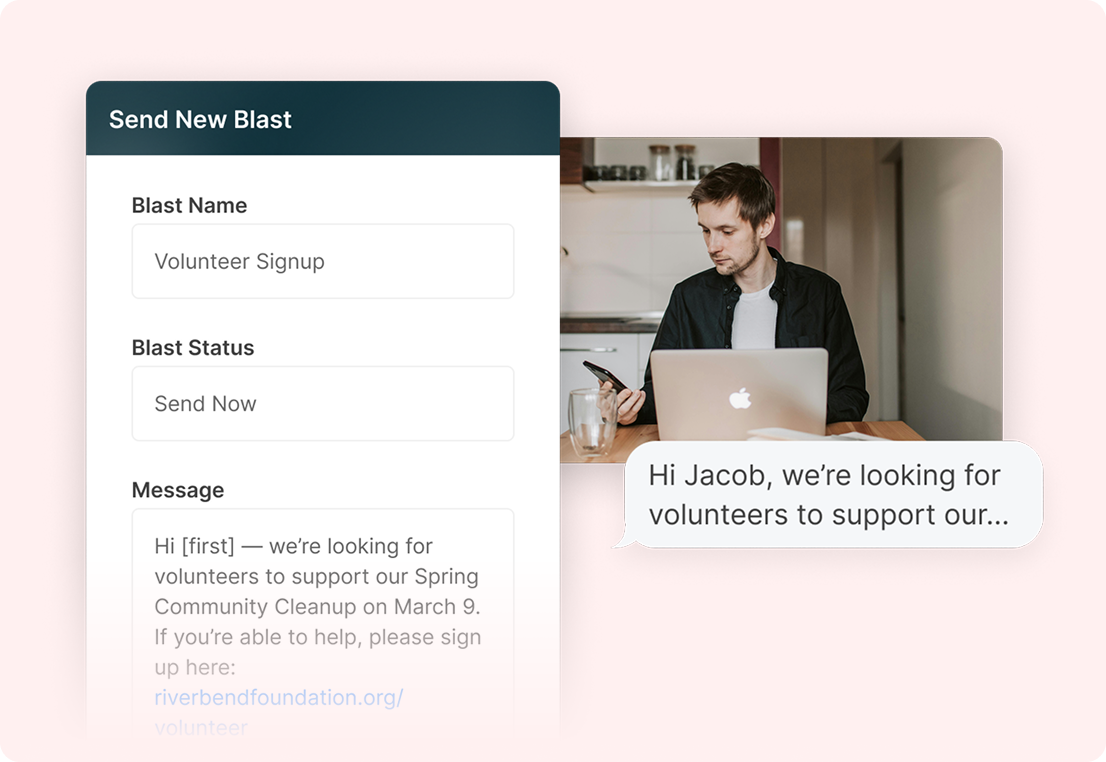
Support high-volume outbound messaging from business-controlled numbers with delivery receipts, error callbacks, and webhook-based event processing.
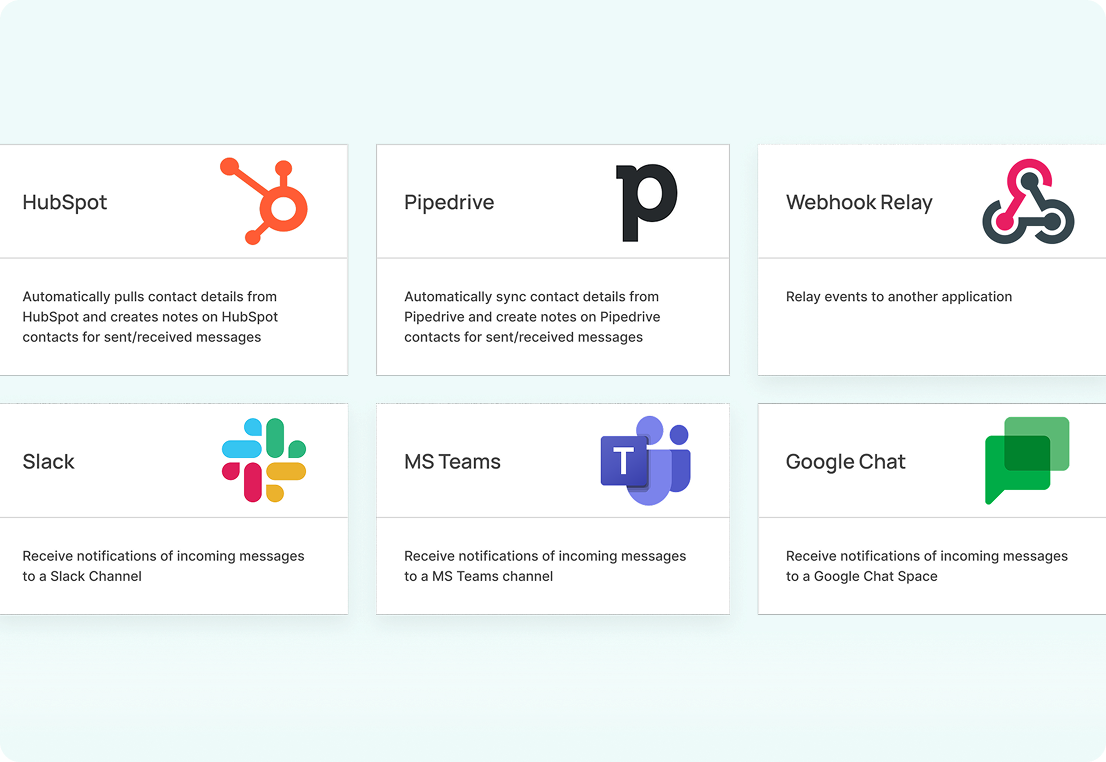
Connect SMS directly to CRMs, ticketing systems, case management tools, and custom applications using flexible APIs, webhooks, SFTP delivery, or email-based integrations.
Yes. Inbound SMS messages, opt-ins, opt-outs, and delivery events can be routed to dedicated endpoints, giving developers full control over processing logic. This ensures your programmable messaging API works the way your architecture requires rather than forcing rigid event handling.
TextBetter’s SMS APIs support modern JSON payloads in API v2, while API v1 accommodates HTTP-based calls for simpler or legacy integrations. This flexibility allows teams to integrate with both modern services and older systems without rewriting core logic.
Yes. TextBetter allows you to customize message payloads and routing logic so applications can send messages and process responses according to their own business rules.
Yes. In addition to APIs and webhooks, TextBetter supports SFTP delivery and email-based workflows so applications can receive SMS text messages even in environments where real-time API integration is not possible.
TextBetter is designed for reliable messaging, with structured routing, delivery tracking, and event logging that support production-grade environments as message volume grows.
Yes. Developers and platform teams can access delivery data and detailed analytics to monitor system behavior, validate integrations, and troubleshoot issues in production.
Landline texting solutions built for business
Prefer to talk it through? Call us at (800) 322-1112